December 3 — International Day of Persons with Disabilities: What actions can everyone take?
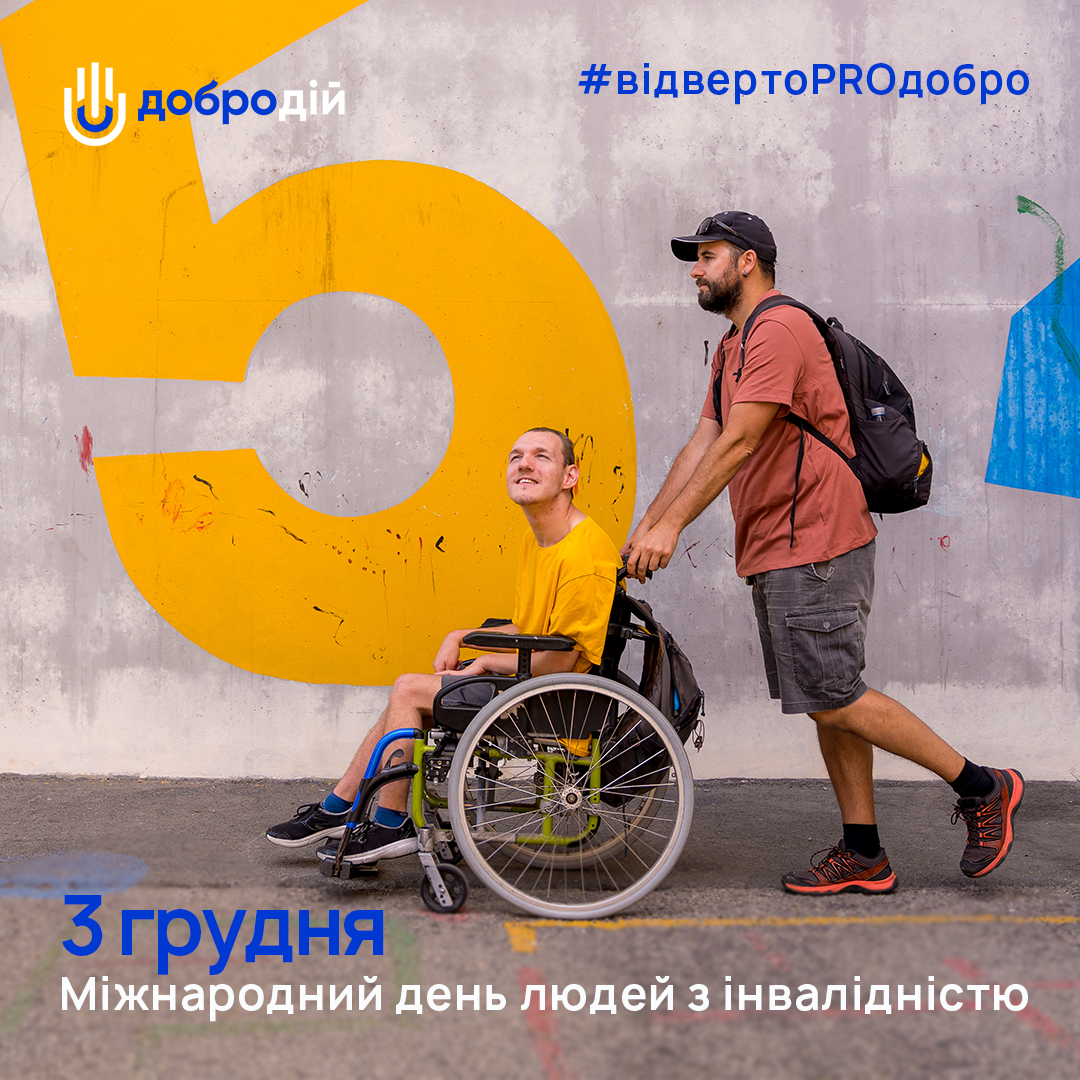
According to alarming statistics from recent years, over 3 million people with disabilities live in Ukraine, including approximately 164,000 children. Sadly, these numbers are rising each year, mostly due to Russian military aggression. Children and adults can receive disabling diagnoses from mine and explosive injuries caused by shelling or from chronic illnesses. Despite their different stories, all these individuals need attention, support, dignity, and a good quality of life.
In our daily work at the Charity Exchange 'DobroDiy,' we hear many stories of children and teenagers with serious diagnoses who have been labeled as 'children with disabilities,' which can feel like a death sentence. Most of our charitable projects focus on providing direct support to these children and addressing specific needs. However, we have always advocated for systemic solutions, including societal changes that promote tolerance, inclusion, social support, and awareness.
On December 3, the world observes the International Day of Persons with Disabilities, raising awareness of issues and advocating for the protection of rights, dignity, and well-being. The lives of these individuals are far more challenging than a healthy person might imagine. Nonetheless, they do not seek pity or special treatment; what matters most to them are fundamental needs, such as the opportunity to participate in society and to achieve self-fulfillment.
Here in Ukraine, we are progressively working to build a society with a strong culture of human relations. Having a respectful and correct attitude toward our fellow citizens with disabilities is a key indicator of such a society.
Here are some important points to consider:
- A person is ultimately a person. Disability does not define someone. Avoid making assumptions about a person's abilities, needs, or lifestyle. This is especially important because a disability might not always be visible—a person can look completely healthy but still have neurological disorders, for example.
- Respect personal space. This universal rule applies to everyone. However, people with disabilities may be more vulnerable to such behavior from others. Always ask if a person needs help. Wheelchairs, crutches, and hearing aids are part of a person's personal space and should not be touched without permission.
- Remember inclusion. Despite the tough wartime conditions in Ukraine, developing inclusive spaces and integrating them into city infrastructure has increased again in some areas. However, it is crucial to manage all parts of these spaces properly and support people with disabilities.
- Do not block access for people with limited mobility. Keep ramps, tactile paths, wheelchair areas, and handrails clear. In tight spaces, it's better to let someone who needs more room pass first.
- Use the correct form of words and emotional tone. Say 'a person with a disability,' not 'a disabled person.' When possible, listen to how the person refers to themselves. Avoid dramatizing or showing pity or sympathy. 'Poor' and 'fighting bravely' are unnecessary and intrusive judgments.
We believe that it is possible to create a Ukrainian society in which people with disabilities can live simpler, better, and more comfortable lives, and where citizens are not excluded from society due to health problems. By protecting the dignity of children and adults with disabilities today, we are protecting our humanity!
Support children and adolescents with serious diagnoses on our website: https://248.dp.ua/.
РЕЗУЛЬТАТИ ВІДБОРУ ЗАЯВОК НА ОПЛАТУ РЕАБІЛІТАЦІЇ ДО КІНЦЯ 2026 РОКУ
Список зареєстрованих заявок на оплату реабілітації
УВАГА! РОЗПОЧИНАЄМО ПРИЙОМ ЗАЯВОК ДО ЧЕРГИ НА РЕАБІЛІТАЦІЮ
Do you have a project?
WRITE US